

Advent is the season of four Sundays before Christmas, when the church gets ready to celebrate the birth of Jesus and looks ahead to the day He comes again. The name comes from the Latin word adventus, which means “coming.” In 2026, Advent begins on Sunday, November 29, and runs through Christmas Eve.
Advent is also the first season of the church year, the calendar of seasons that walks through the life of Christ. So while the rest of the world is counting down to January 1, the church starts its new year here, with a few quiet weeks of waiting, praying and singing before the joy of Christmas.
What does Advent mean?
Advent is about one word, coming, and the Bible speaks of Jesus coming to us in three ways. The readings and hymns of the season move back and forth among all three, which is why Advent can feel quiet and joyful at the same time.
The middle one is the easiest to miss. Advent is not only remembering a baby from long ago, and it is not only waiting for something far off. Every Sunday, Jesus comes to His people through the reading and preaching of His Word and through the Lord’s Supper, which is why Lutherans keep Advent in church and not only at home. You can read more about that in What Is Lutheran Worship?
“Behold, the virgin shall conceive and bear a son, and they shall call his name Immanuel” (which means, God with us).
Matthew 1:23 (ESV)
Our congregation takes its name from this verse. Immanuel is a promise more than a title: God did not stay far away from us at the first Christmas, and Jesus does not stay far away from us now.
The Advent wreath and its candles
The Advent wreath is a circle of evergreen branches holding four candles, with one more candle lit each Sunday, so the light grows a little brighter as Christmas gets closer. The circle has no beginning and no end, a picture of God’s eternal love, and the evergreen is a sign of life that lasts through the winter. Many wreaths also have a white candle in the center, the Christ candle, which is lit on Christmas Eve.
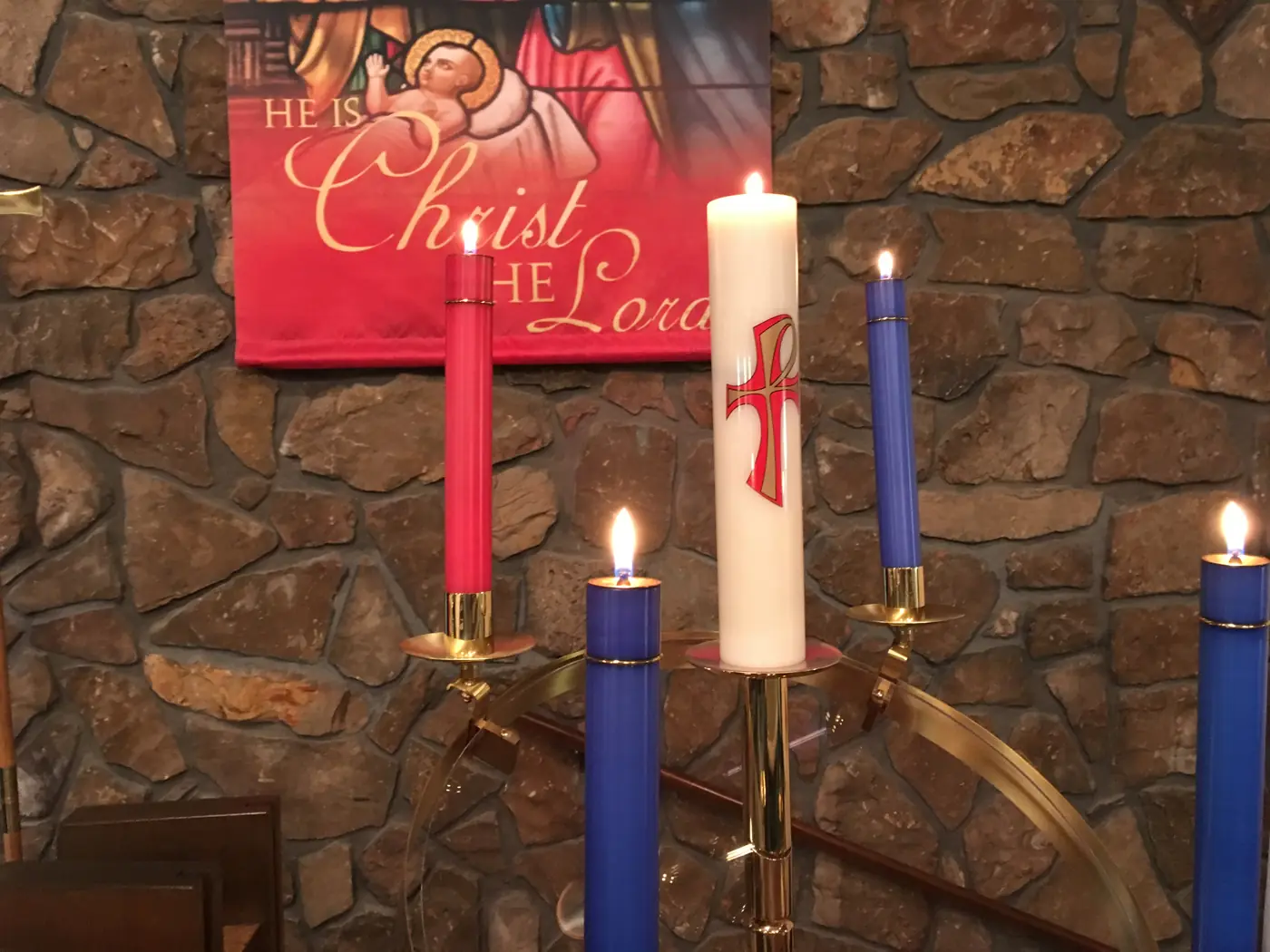
Three of the candles are usually blue or purple. The third is often pink, because the Third Sunday of Advent is traditionally called Gaudete Sunday, from the Latin word for “rejoice” in Philippians 4:4: “Rejoice in the Lord always; again I will say, rejoice.” Many families give the candles names such as Hope, Peace, Joy and Love, or Prophecy, Bethlehem, Shepherds and Angels. Those names are a helpful custom rather than a rule, and different churches use different sets. At Immanuel, our brass wreath holds three blue candles and one rose candle around a tall white Christ candle marked with the Chi-Rho, the first two Greek letters of the word “Christ.” It isn’t a seasonal candle. It is the same Christ candle that stands on its own stand beside the pulpit and is lit every Sunday of the year. During Advent it moves to the center of the wreath. On Good Friday it is carried out of the church and later brought back in, a picture of Jesus’ death and resurrection. The light we wait for in Advent is the same light that shines from the empty tomb.
The wreath itself has Lutheran roots. It began in Germany in the 1830s with a Lutheran teacher who wanted to help the children in his care count the days to Christmas. That story is told in the “Dig deeper” section below.
Why is Immanuel blue during Advent?
If you walk into Immanuel during Advent, you will see blue on the altar and pulpit. These cloths are called paraments, and their colors change with the seasons of the church year. Blue is the color of hope, like the deep blue of the sky just before dawn, and it sets Advent apart from Lent, which is purple at Immanuel. Lent is a season of repentance on the way to the cross. Advent has repentance in it too, but its main note is hopeful waiting. Lutheran Service Book, our hymnal, allows either blue or violet for Advent, so you may see purple at other Lutheran churches, and both are faithful choices.
Where Advent fits in the church year
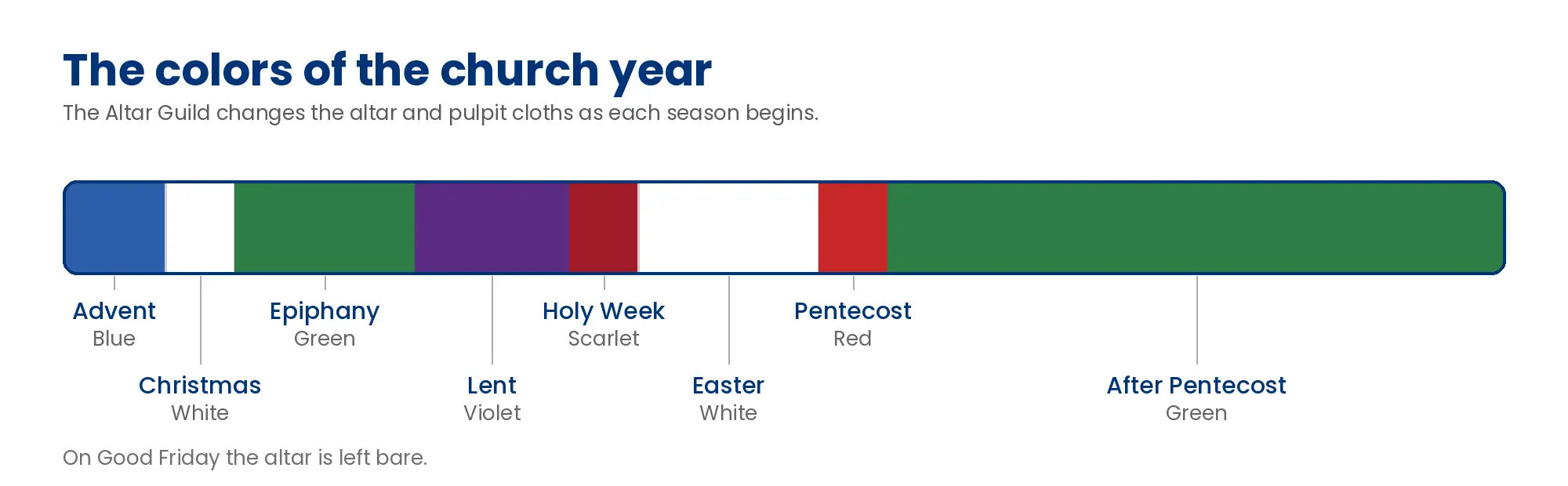
The first half of the church year, from Advent through Easter and Pentecost, follows the life of Christ. The second half, the long green season after Pentecost, follows His teaching. The last Sundays of that green season speak about the end of time, and then Advent begins, so the church year ends and starts on the same note: Jesus is coming.
O come, O come, Emmanuel,
“O Come, O Come, Emmanuel,” Lutheran Service Book 357, stanza 1
And ransom captive Israel,
That mourns in lonely exile here
Until the Son of God appear.
Rejoice! Rejoice! O Israel,
To thee shall come Emmanuel!
Advent at Immanuel in 2026
Everyone is welcome at all of these, and you do not need to be a member. Every service is also streamed live if you can’t be there in person.
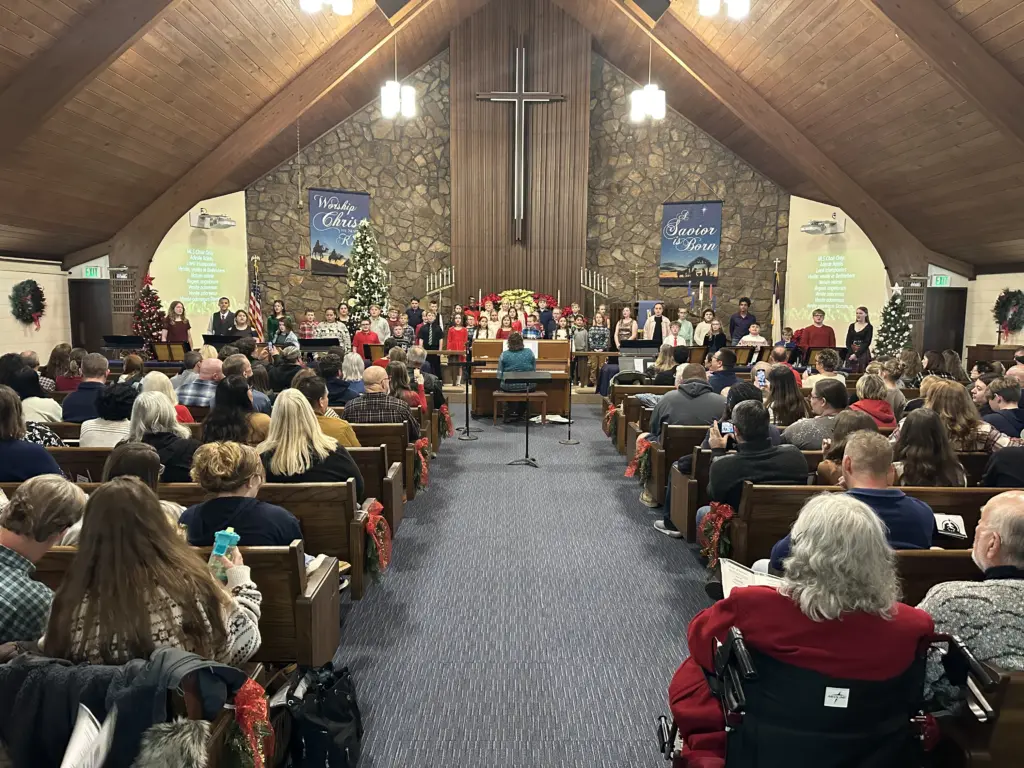
The Wednesday suppers are an easy first step if you have never been to Immanuel. Come straight from work or school, eat with us, and stay for the service or the children’s program. Martin Luther School is our school for children from 3 years old through eighth grade, and its Christmas programs are some of the most joyful evenings of the year. If you are wondering what a Lutheran service is like, What to Expect on Your First Visit answers the usual questions about parking, dress and bringing children.
Advent at home. This year we are giving families free copies of Come and See the Savior!, a daily Advent booklet for kids with a short thought, an activity and a prayer for each day. For adults, we recommend Love’s Pure Light, the free Advent devotions from Lutheran Hour Ministries. Coming for Thanksgiving first? Join us for Thanksgiving Eve worship on Wednesday, November 25, at 6:30 pm.
Dig deeper
Where did Advent come from?
Christians have kept a season of preparation before Christmas since at least the 400s and 500s. In parts of Gaul, which is modern France, it lasted about six weeks and included fasting, much like Lent. In Rome it settled at four Sundays, and that is the pattern most Western churches, Lutherans included, keep today.
Martin Luther and the Lutheran reformers kept Advent because its readings and hymns point so clearly to Christ. One of the oldest Advent hymns in our hymnal, “Savior of the Nations, Come” (Lutheran Service Book 332), is Luther’s own German version of a hymn written by Ambrose of Milan in the 300s.
The Lutheran who made the first Advent wreath
In 1839, Johann Hinrich Wichern, a Lutheran teacher who ran a home for poor boys in Hamburg, Germany, grew tired of the children asking how many days were left until Christmas. He fixed candles to a large wooden ring made from an old cart wheel, with small red candles for the weekdays and large white candles for the Sundays, and lit one more each day.
Families soon copied the idea at home, decorated the ring with evergreen branches, and kept only the four Sunday candles. That smaller wreath spread from German Lutheran homes to churches all over the world.
Why does the church year begin in Advent?
The church year follows the story of Jesus in order, and that story begins with the promise of His coming. Advent’s readings start with the Old Testament prophets who foretold the Savior, move to John the Baptist, who prepared the way for Him, and end with Mary and Joseph on the edge of the first Christmas. Starting the year here means every year begins by hearing God’s promises before we celebrate how He kept them.
Frequently Asked Questions
When does Advent start in 2026?
Advent 2026 begins on Sunday, November 29, and ends on Christmas Eve, Thursday, December 24. The date moves each year because Advent always starts on the fourth Sunday before Christmas, which falls between November 27 and December 3.
Do Lutherans celebrate Advent?
Yes. Lutheran churches, including congregations of The Lutheran Church—Missouri Synod like Immanuel, keep Advent with an Advent wreath, blue or violet paraments, Advent hymns, and readings about Christ’s coming. Many, including Immanuel, also hold midweek Advent services.
What do the four Advent candles mean?
One candle is lit for each Sunday of Advent, so the growing light shows Christmas drawing near. The third candle is often pink for Gaudete, or “Rejoice,” Sunday. Common names for the candles are Hope, Peace, Joy and Love, though churches use different sets. A white Christ candle in the center is lit on Christmas Eve.
Is Advent the same as Lent?
No, though both are seasons of preparation. Lent prepares for Jesus’ death and resurrection and has a strong focus on repentance. Advent prepares for His birth and His return, and its main note is hope. At Immanuel, Advent is marked with blue and Lent with purple to help show the difference.
Can I come to an Advent service if I’m not a member?
Yes, and we would love to have you. The Wednesday Advent suppers on December 2, 9 and 16 are free and open to everyone, and so are our Sunday services and Christmas Eve candlelight services. If you can’t come in person, you can watch worship online.
Immanuel Lutheran Church · 2616 S Connecticut Ave, Joplin, MO 64804 · About us · What we believe