

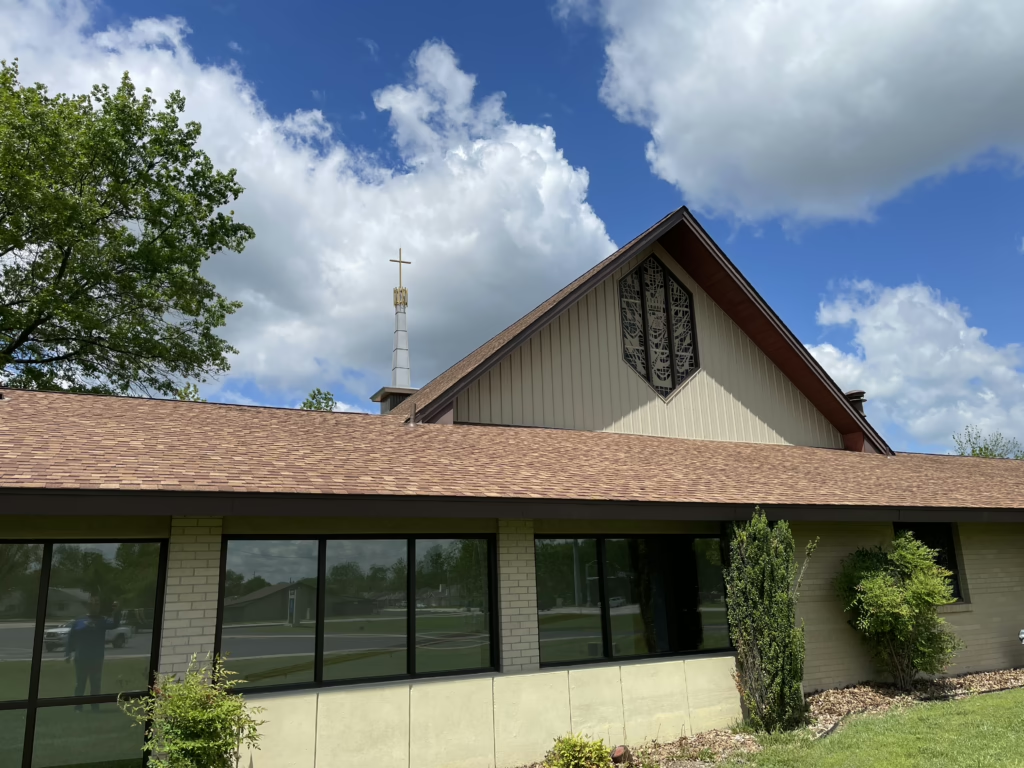
You’ve been invited to a Lutheran church — or maybe you grew up in one and never quite understood why things happen the way they do. Either way, you’ve come to the right place. This guide walks through what happens at a Lutheran service, why it’s structured the way it is, and what to expect the first time you walk through our doors at Immanuel.
It’s Called the “Divine Service” — and That Name Matters
Lutheran churches in the LCMS tradition call Sunday worship the Divine Service. That name reflects a core Lutheran conviction: worship is not primarily something we do for God. It’s something God does for us.
In the Divine Service, God comes to us through His Word and Sacraments — forgiving our sins, strengthening our faith, and sending us back into the world renewed. We respond with prayer, praise, and thanksgiving. But He makes the first move. Always.
“I was glad when they said to me, ‘Let us go to the house of the LORD!'” (Psalm 122:1, ESV)
What’s the Service Like at Immanuel?
Immanuel Lutheran Church in Joplin is a traditional Lutheran congregation. Our services and hymns come from the Lutheran Service Book (LSB), the official hymnal of the LCMS. You’ll hear joyful organ music, bold Law and Gospel preaching, and lots of Scripture — from the opening liturgy to the final blessing. From time to time you can also expect something special: a choir anthem, a vocal or instrumental feature, or other music from our talented congregation.
Services are held at 8:00 am and 10:30 am every Sunday (September through May). During the summer months of June through August, we combine into one service at 9:00 am, with Bible Class and Sunday School at 10:15. Both regular services are also streamed live on Facebook and YouTube.
The Shape of the Service
The Lutheran Divine Service has two main movements that flow into each other: the Service of the Word and the Service of the Sacrament. This two-part shape goes back to the earliest Christian communities — and even to first-century Jewish synagogue worship. Martin Luther reformed the service, clearing away anything that contradicted Scripture, but kept its ancient, Christ-centered structure intact.
Part One: The Service of the Word
Confession and Absolution. The service begins with an honest acknowledgment of sin. We come before God as we are, confess what we’ve done and left undone, and receive His absolution (forgiveness) spoken through the pastor: “I forgive you all your sins in the name of the Father and of the Son and of the Holy Spirit.” It is one of the most quietly powerful moments of the service.
Kyrie and Hymn of Praise. Kyrie eleison — Greek for “Lord, have mercy” — is one of the oldest prayers in Christian worship, a three-fold cry for mercy echoing Scripture’s own language. The Gloria in Excelsis (“Glory to God in the Highest”) follows — the same song the angels sang at Christ’s birth — sung by the full congregation.
Scripture Readings. Every service includes three assigned readings from the three-year lectionary: an Old Testament lesson, an Epistle (New Testament letter), and a Gospel reading. These cycle through the full witness of Scripture over three years, ensuring the congregation hears the whole counsel of God — not just a preacher’s favorites.
“Faith comes from hearing, and hearing through the word of Christ.” (Romans 10:17, ESV)
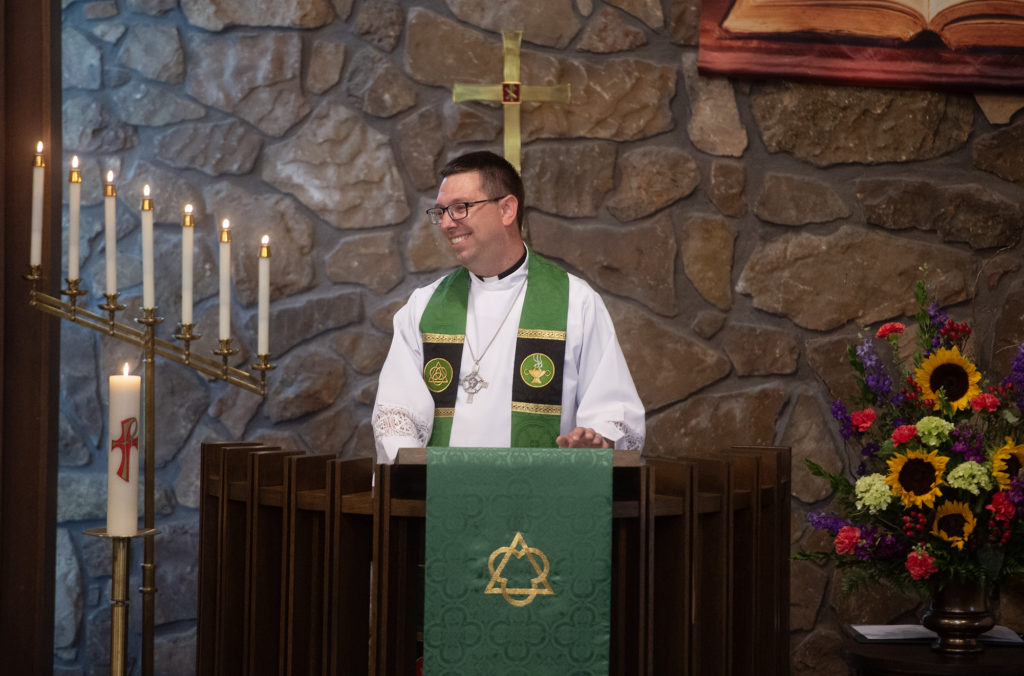
The Sermon. The sermon follows the Gospel reading. In Lutheran practice, it is an extension of Scripture — not a motivational talk, but an exposition of what God’s Word says and what it means for you today. At Immanuel, Pastor Ramstad preaches from the assigned texts with an emphasis on Law and Gospel: what God’s Word demands, and the grace Christ freely provides.
The Kids Talk. Each service at Immanuel also includes a Kids Talk — a brief, direct message for children. It’s one of our favorite moments of the service, and adults learn from it too.
Part Two: The Service of the Sacrament
The Creed. After the sermon, the congregation stands and confesses the faith together — the Nicene Creed or the Apostles’ Creed. This is the church across twenty centuries saying: this is what we believe, this is what we stake our lives on.
Prayers of the Church. The congregation brings its needs — and the needs of the world — before God. These intercessory prayers cover the church, the community, those who are sick or suffering, and the world at large.
Holy Communion. At Immanuel, Holy Communion is celebrated on the first and third Sundays of the month. Lutherans believe Christ is truly present in, with, and under the bread and wine — not symbolically, but actually. This is called the Real Presence. The pastor repeats Jesus’ own words of institution — “This is my body… This is my blood” — and the congregation receives His body and blood for the forgiveness of sins.
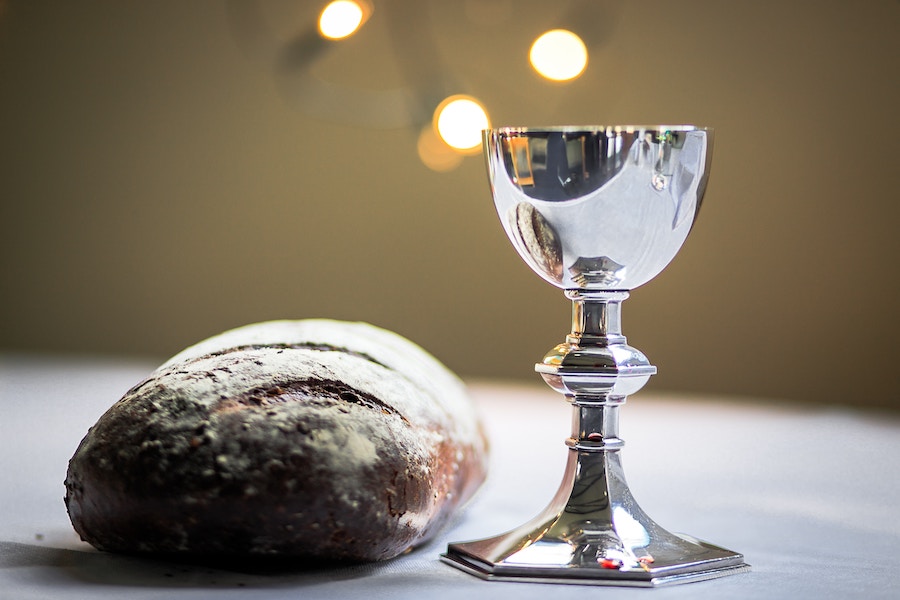
“For as often as you eat this bread and drink the cup, you proclaim the Lord’s death until he comes.” (1 Corinthians 11:26, ESV)
Note: Because of the significance of this sacrament, Immanuel practices close communion — welcoming those who are members of the LCMS or a Lutheran church body in fellowship with us. If you’re visiting, please speak with the pastor, or come to the altar for a blessing instead.
Why All the Structure?
First-time visitors sometimes feel like they’ve walked into something ancient and formal. They have — and that’s part of the point. The liturgy doesn’t change from week to week because God’s gifts don’t change. The same absolution, the same Word, the same body and blood of Christ — week after week, generation after generation. The structure frees the worshiper to attend fully to what God is doing, rather than wondering what comes next.
Luther himself declared in his Heidelberg Disputation (1518): “True theology and recognition of God are in the crucified Christ.” The liturgy keeps Christ at the center — every single week.
“Where two or three are gathered in my name, there am I among them.” (Matthew 18:20, ESV)
Practical Things to Know for Your First Visit
Bulletins with the full liturgy and all the words are provided — you don’t need to memorize anything. Children are genuinely welcome in the service; a staffed nursery, kids’ pages, and busy bags are also available in the lobby. If it’s your first time, stop by the Welcome Center just inside the building and introduce yourself to Pastor Ramstad. We’d love to meet you.
“Let us not neglect to meet together, as is the habit of some, but encouraging one another — and all the more as you see the Day approaching.” (Hebrews 10:25, ESV)
Want to Learn More?
If you’re exploring the Lutheran faith more deeply — or if you have a student getting ready for Confirmation — we’d love to connect. Read more in our post What Is Lutheran Confirmation?, or explore our full What We Believe page. You can also watch recent services and sermons from Immanuel any time.
One Comment
What Is Lutheran Confirmation? | Immanuel… Pingback
[…] — or if you’re exploring Lutheran worship for the first time yourself — our post What Happens at a Lutheran Service? walks through the entire Divine Service from Confession and Absolution to Holy Communion. You can […]
Commenting has been turned off.